
Thermal Humpback Diagnosis & Structural Correction
Installed mats humped in the afternoon heat and curled overnight. The cause was differential thermal expansion, not ordinary molding warpage.
Engineering Case Study 007
- Industry
- Heavy-Duty Access / Ground Protection
- Product
- Two-Panel Structural Composite Mat
- Role
- Field Failure Analysis / Product Development
- Engagement
- Thermal Distortion Diagnosis & Corrective Engineering
- Field Symptom
- Daytime hump / overnight reverse curl
The Field Failure
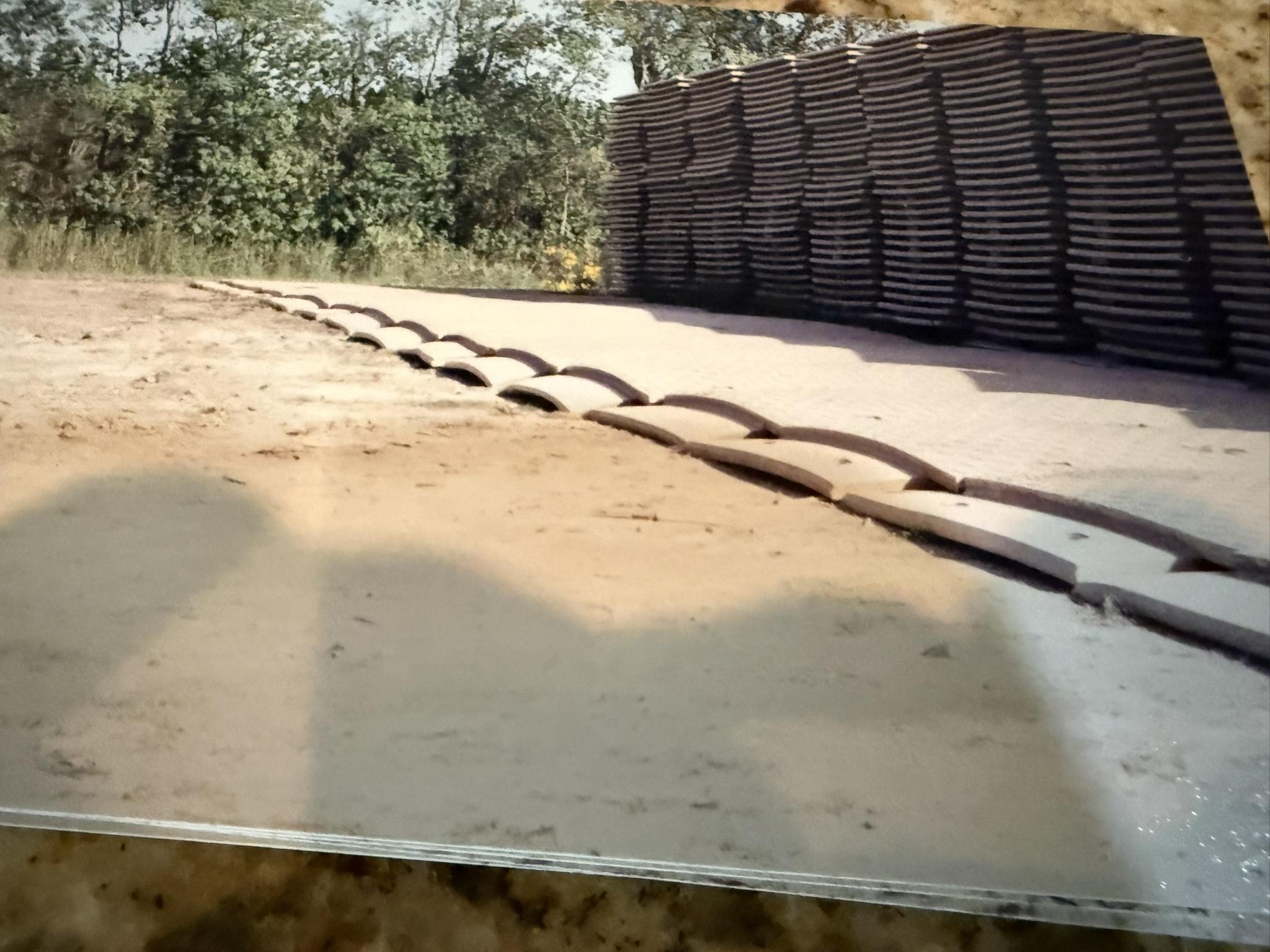
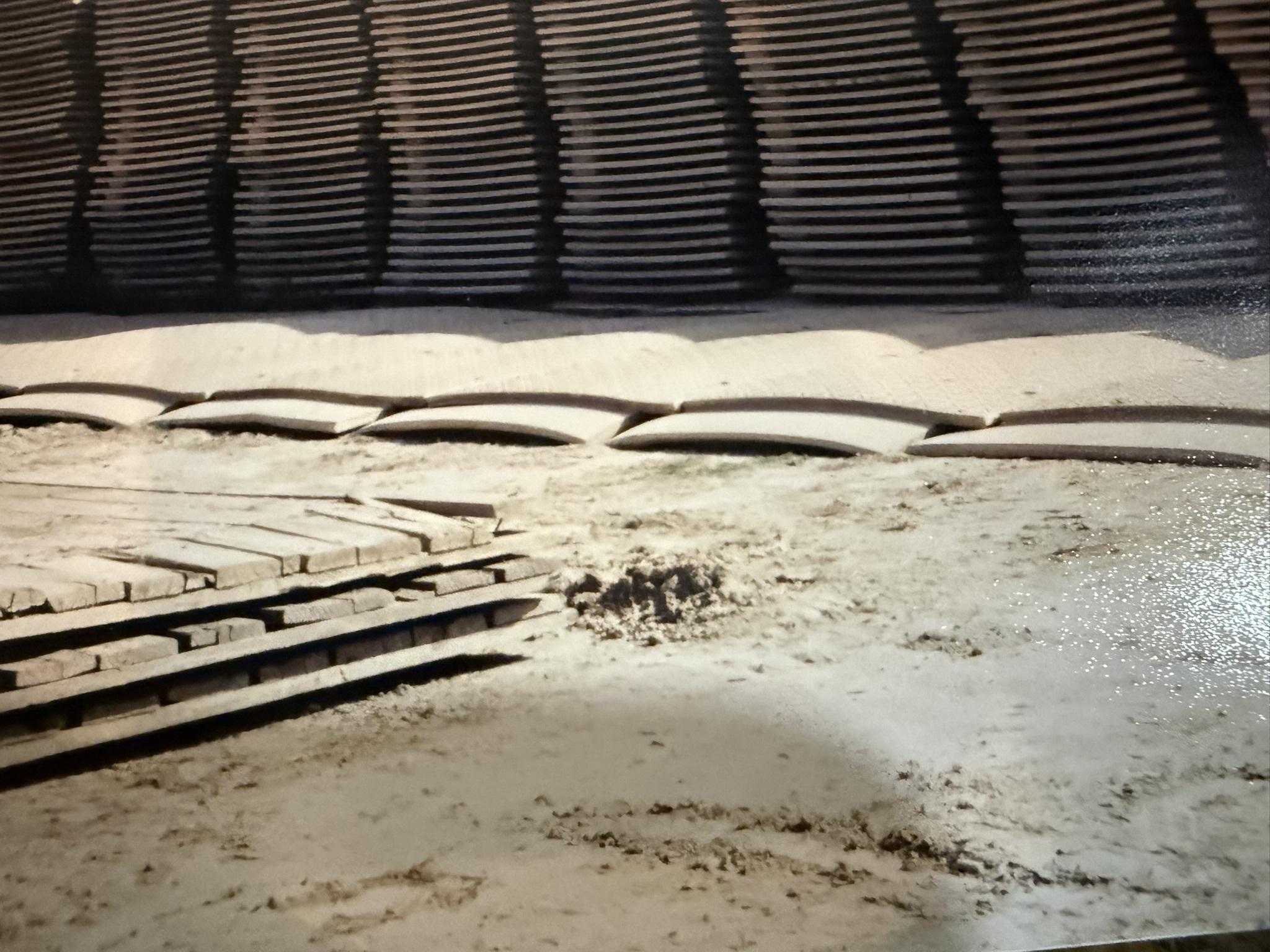
Almost immediately after deployment, customers reported a behavior that had not appeared when the mats left production. In the morning the installed roadway could look like waves on the ocean; by the heat of the afternoon individual mats could resemble humpback whales. Unrestrained humps reached approximately 12 inches, making vehicle travel uncomfortable and potentially dangerous. Overnight the deformation reversed into a curl.
The behavior was most severe when the daily temperature swing was large, particularly in early spring and fall. A morning temperature near 40°F could be followed by a mat surface temperature around 140°F by mid-afternoon.
Diagnosis Before Correction
The time-of-day pattern immediately separated the problem from ordinary molding warpage. Mats in shade did not show the same behavior. A large test pad was installed outside the plant and monitored for weeks. Surface, underside and environmental temperatures were tracked, with measured temperature differences exceeding 75°F.
The physical mechanism became clear. Direct solar heating caused the upper panel to expand while the lower panel, isolated from the sun and separated by an internal air gap, remained much cooler. The perimeter was welded, but the interior panels were connected at only 21 through-fastener locations. The upper half wanted to grow while the lower half did not. With insufficient internal shear restraint, that differential expansion had nowhere to go except into the shape of the mat.
Development of the Correction
Material changes were tried first. Various fillers intended to reduce creep were evaluated, but increased dimensional stability came at the cost of toughness. Longitudinal structural ribs were also tried. They added some stiffness, but also added weight, and the benefit did not justify the cost.
The more effective approach was to restrain relative shear between the two molded panels. Sixty hex-shaped dowels were added in a specific pattern—three around each through-fastener. The dowels fit snugly into the existing honeycomb cells and mechanically coupled the two halves, resisting the differential movement before it could accumulate into a large hump. Connecting adjacent mats with the locking system provided additional restraint at the roadway level.
The product later evolved to hot-plate welding of the two panels, which eliminated the underlying condition.
Validation
The corrected mats were returned to the same outdoor test environment and subjected to actual solar heating and daily temperature cycling. Thermal movement was dramatically reduced. The test program continued for approximately three months before the correction was considered validated.
After the correction entered production, the humpback complaints disappeared. Subsequent field service extending beyond 20 years provided long-term confirmation.
Results
| Area | Result |
|---|---|
| Observed deformation | Up to ~12 in unrestrained hump. |
| Thermal exposure | ~40°F morning to ~140°F mat surface by afternoon. |
| Measured temperature delta | >75°F across monitored conditions. |
| Root mechanism | Differential thermal expansion between sun-heated upper panel and cooler lower panel. |
| Original internal connection | Welded perimeter + 21 through-fasteners. |
| Corrective restraint | 60 hex dowels in a defined pattern, three around each fastener. |
| Validation period | ~3 months of outdoor testing. |
| Field result | Humpback complaints disappeared. |
| Long-term validation | >20 years of field service. |
Engineering Significance
The case illustrates why correction should follow diagnosis, not precede it. The deformation looked like a manufacturing problem, but its cause was environmental physics. The successful method was to understand the mechanism, change one variable at a time, document the result, and avoid introducing multiple simultaneous changes that would hide cause and effect.